A work of art speaks a truth we can’t speak outright: the truth of the human experience. Love, joy, grief, guilt, beauty—no words can communicate these. We can only represent them in stories and pictures and songs. Art is the way we speak the meaning of our lives.
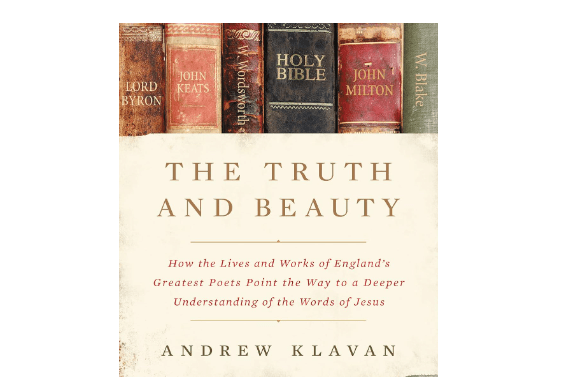
I am of the opinion that one should read many and various books. I am of the same opinion regarding art and music. However, not all art, music, or literature are of the same value or quality. In fact, a good portion is ugly, false, and, well, bad. There is a reason we have classics. Conversely, there is a reason a good amount of literature for every time has fallen to the wayside and even into the wastebasket. Over time, most readers and teachers have tried to find what is true, good, and beautiful to pass on to the next generation. That is, until these most recent generations. Yet there are still many people who seek such good works of literature. I have written previously about Karen Swallow Prior’s book On Reading Well, and other authors have tried to share that love and quest for the good, true, and beautiful. Such is the case with Kalavan’s book The Truth and the Beauty. While I cannot say I loved this book like I have others, it is still a fascinating read that adds to the conversation on good books for a good culture.
Of course, I wasn’t sure what to make of this book at first. Klavan sometimes has a way of talking, and writing, as though he forgot that others were listening as he delves into the recesses of his memory, searching for connecting bits of history and text. Often, this book seemed like a particular musing on a random point of mind and history. And yet, somehow (most of the time), he brought it back to the central point of what makes a good culture, how we got where we are, and who those authors and figures of history were that brought us to this place. Kalavan also does a decent job criticizing the negative consequences of the Enlightenment and even the Reformation. There were a couple of times I couldn’t help but notice his biases as a post-enlightenment, distantly reformed/evangelical Christian who sometimes borrows too much from the 18th century and not enough from the 16th century. However, I still thought most of his Christian commentaries were at least interesting.
It is the paradox of virtue knit into the fabric of reality: you will not be free unless you are virtuous; you cannot be virtuous unless you are free.
Ultimately, Klavan shows how the world was altered when the West collectively questioned truth, thus rejecting moral authority and its foundations. This questioning was not for mere understanding’s sake. Instead, it destroyed individuals in their hope and families in their stability. It created what they called free love by shackling the spirit to the whims of the flesh. Thus, the arts and literature – culture – was destroyed because its foundations were gjundermined. This is the heart of Klavan’s book. While you have to dive in and grapple with history as one living through its consequences, you will come out having a better, if incomplete, understanding of how we got to our current state of the world.
Radicals transgress the paradox of virtue because they claim the knowledge of good and evil for themselves and strip the power to freely choose virtue from others. In this way, they transform their imagined paradise into a living hell.
Blessings to you and yours,
~Madelyn Rose Craig
 Madelyn Rose Craig