In a sort of ghastly simplicity we remove the organ and demand the function. We make men without chests and expect of them virtue and enterprise. We laugh at honour and are shocked to find traitors in our midst. We castrate and bid the geldings be fruitful.
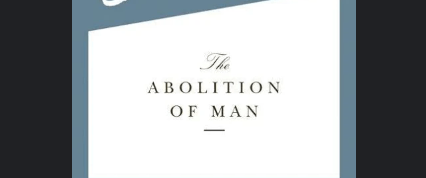
Most people familiar with Lewis will likely recognize this quote. I had seen it referenced several times over the years, but I wasn’t really sure where it came from until about a year or so ago. But, as I have struggled to really appreciate Lewis’ nonfiction, I didn’t bother getting a copy of The Abolition of Man until a couple months ago. I have typically found his fiction much better for understanding his philosophy. Yet I found his writing in this piece very approachable, and I can safely say it is my favorite of his nonfiction so far.
This book was necessary not only for the time it was written in but also for today. Lewis saw the trends for his time, offered his warnings, and was ignored. The consequences of questioning our foundations for every value that we held in the west was began to make themselves evident in the middle of the 20th century. And those consequences did come. Man continued questioning and throwing off every value and virtue handed to them from the past through the decades following the Wars until there was a harsh swing back to reality. But we’re back to that undermining now. We didn’t learn our lesson. We’re at another such turning point today where we have removed virtue and value yet keep working on their premises and wonder why the world isn’t following the old rules. And it was largely for these reasons that I found The Abolition of Man both instructive and concerning. Instructive because it is very clear what we should do:
For every one pupil who needs to be guarded against a weak excess of sensibility there are three who need to be awakened from the slumber of cold vulgarity. The task of the modern educator is not to cut down jungles but to irrigate deserts. The right defence against false sentiments is to inculcate just sentiments. By starving the sensibility of our pupils we only make them easier prey to the propagandist when he comes. For famished nature will be avenged and a hard heart is no infallible protection against a soft head.
We need to remember that our task as parents, educators, and people in this world is not to invent new virtues, if such a thing could be done, but to care for the garden given to us so that we might give it to the next generation. We must build up men to be men, not hollow creatures. But Lewis’ words are also concerning because our values have been so undermined that people don’t see the need for them, and thus we have no foundation – a post-modern world in free fall to our own destruction. By undermining those old values, we don’t create new ones; the hollow men will fill themselves with their base passions.
The old dealt with its pupils as grown birds deal with young birds when they teach them to fly; the new deals with them more as the poultry-keeper deals with young birds — making them thus or thus for purposes of which the birds know nothing. In a word, the old was a kind of propagation — men transmitting manhood to men; the new is merely propaganda.
It is the magician’s bargain: give up our soul, get power in return. But once our souls, that is, ourselves, have been given up, the power thus conferred will not belong to us. We shall in fact be the slaves and puppets of that to which we have given our souls.
When I first started reading this book, I considered how it was especially helpful for parents and educators of every stripe. Yet I think anyone claiming to have a liberal arts education should read this book as well. Truly most everyone should read it, but especially those who care for value, virtue, and future generations as well as the past. It is crucial for understanding not just the limits of Western thought but all philosophy. It should be the first book of any course on Natural Law, giving a healthy discussion as well on the balance of rights and duties, meaning and action. This book is a link from modernity to our past in literature and philosophy. But it is also immensely practical. Not that literature and philosophy are not, but this isn’t so heady as to not be understood or applied to ours lives. But you have to dive into the depths with Lewis in order to come out into understanding with him on the other side. The quote above is good, but not enough on its own. Lewis offers an understanding of humanity among the nations that the enlightened thinks they can eliminate through “pure rationality” and force, and the pagan can ignore through brutality, both indulging their base passions. You have to be there with him in the beginning, in the musings and seeming tangents, to get to the conclusion of not just his book but also for our current cultural questions. The Abolition of Man will help you understand what the men without chests really is and why that should matter to you and all humanity.
The Abolition of Man is a wonderfully approachable and practical work of philosophy that is prime for every age. It is a stern warning and a handbook for life. It was a struggle for me to choose some of the best quotes to share, because the whole book is fantastic. If you have wanted to get into Lewis and need a quick and applicable read, this is the book for you. Though some might find his name for foundational values a little odd (he abbreviates them as the Tao), his book does well to explain what he means and why this foundational value system is not just important but universal. As I said before, nearly everyone should read this book. Only those who reject those foundations will despise his words, and his words are needed today just as much as in the days this book was written in.
Blessings to you and yours,
~Madelyn Rose Craig

