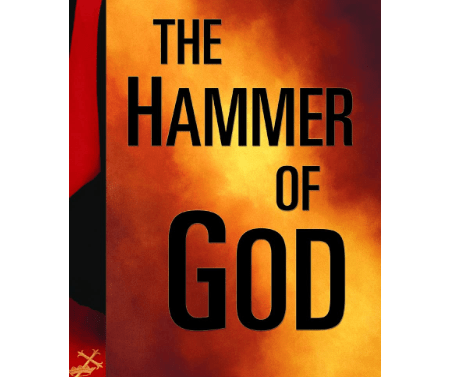
I have lost count of the number of people who have told me to read this book. A friend even bought a copy for me, and I still avoided it. And I have found that with every book I’ve struggled to pick up and read, I should have read it the moment I got it in my hands. Apparently, I’ll need to read Out of the Silent Planet next.
This book is unlike most novels I have read (or at least most modern novels). It is historical fiction, yet like The Saints of Whistle Grove, it discusses people and events as though I have known them. These novels explain things kindly but firmly. They convict, and they encourage. They are ultimately stories of hope. I think this is due to the spiritual theme of the books. In The Hammer of God, these pastors and their parishioners are crafted from real people in this story to engage, enlighten, and hopefully warn readers of any age. If I didn’t know better, I would have said that this book couldn’t have been written more than a decade ago, not nearly a century ago in another country. It conveys timeless truths and speaks in familiar tones. Ultimately, this book reminded me that there is nothing new under the sun, neither sin’s pervasiveness nor God’s unchanging grace. These ills plague God’s people every generation, but His grace is right at hand. God’s enduring Word reminds us time and time again that He and His grace remain. As Giertz writes: It is here for us. Jesus only, for us.
Part of the uniqueness of the novel that I love in addition to its content is its format and style. The story is broken up into three parts, which are three times. This is a style I’ve recently come to like as I believe it adds to the narrative and the message. Each part is also broken up to show a progression in the heart of the main character. And yet, each story is part of the same story. They are one story told at different times, in different ages and ways, and often with different controversies, but to convey that same message: the Word of the Lord endures forever. In Him we have hope. But they also remind the reader that we shouldn’t fall into either legalism or libertineism; in living this, we can endure in our own age. This underlying message adds to the timeless quality of the book. While it is historical fiction, it is also philosophy. Giertz’s Hammer of God is on the shelves with Lewis and Shuermann in crafting the perfect balance of artistry and instruction. This is a novel that carries you to truth without being burdensome. As a side note, the style of his writing changed slightly with each different character. I noticed this particularly in the final section with the last pastor, which I especially loved. Perhaps it is because he saw himself in that man, or knew someone like him. I found that the images became vibrant and melodic. And I truly loved how the story ended. I won’t spoil it, but I found one of the ending scenes of a woman tending to the fireplace until her lost relative returns most fitting for Christians today. We are among those tending the fireplaces, caretakers in service to God and His people, reminding the world that He is greater than all the evils in this world, which He already took on and atoned for. All we must do is walk faithfully with Him.
The Hammer of God is a book of history and allegory; of the walk of the baby Christian, the self-righteous, and the guilty, but ultimately leading to hope, peace, and faith. And if you have heard of it and wondered if you should read it, or if you’ve been putting it off (like I did), this is your invitation to pick it up today and read. I’d encourage you also to read the introduction as it provides helpful background information, but the story is edifying on its own. Come and enjoy a wonderful and engaging story and hear again the promises of God. Read and be encouraged.
Blessings to you and yours,
~Madelyn Rose Craig
 Madelyn Rose Craig